
Summary
April’s Earth Month focus hits close to home in Miami Beach. When erosion threatened the shoreline, the City stepped in with a bold solution that still protects local businesses today. Beach renourishment didn’t just restore sand, it stabilized the economy, supported tourism, and reinforced the foundation that keeps Miami Beach thriving year-round. By rebuilding miles of coastline, the project strengthened storm resilience, supported local businesses, and preserved property values. This Earth Month, it highlights how environmental investment continues to play a critical role in long-term economic development.
April marks more than a seasonal shift in Miami Beach. It’s a reminder that the City’s economic strength is tied directly to how well it protects its natural assets.
By the late 1970s, years of erosion had begun to shrink the shoreline, putting pressure on the beaches that support Miami Beach’s hospitality industry and small business community. On April 10, 1978, the U.S. Army Corps of Engineers launched the first major phase of modern beach renourishment, rebuilding miles of coastline and restoring the width of the beach.
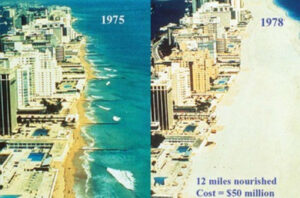
That investment paid off in ways that still show up today. A wider, more resilient shoreline supports hotel occupancy, drives foot traffic to local businesses, and protects the infrastructure that keeps the City running. It also reinforces Miami Beach’s global brand as a premier destination, something businesses rely on year-round.
As we recognize Earth Month, this moment highlights something simple but important. Environmental stewardship and economic development go hand in hand. Protecting the shoreline protects the customer base, the workforce, and the long-term viability of doing business in Miami Beach.
That same approach continues today, through ongoing coastal resilience efforts, public investments, and programs that support a strong, sustainable business environment.


