Summary
Collins Park, a ten-acre land donation by John Stiles Collins to Miami Beach in 1912, played a crucial role in the area’s development from undeveloped land to a vibrant urban community. Collins, a land developer and agriculturalist, initially focused on farming but later shifted towards urban development, which included the establishment of this public park to enhance local quality of life and attract visitors.
This Month in Miami Beach History: The Genesis of Collins Park - A Gift to Miami Beach
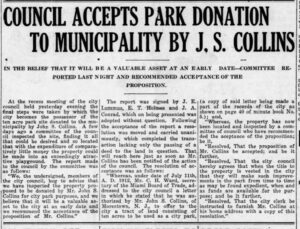
On October 21, 1912, the Miami Beach City Council accepted a donation of ten acres of prime land from John Stiles Collins. This land, now known as Collins Park, is located at 2100 Collins Avenue and is instrumental in shaping Miami Beach.
John Collins, a land developer born in Moorestown, New Jersey, was a key figure in Miami Beach's transformation from undeveloped land to a bustling urban community. With a passion for farming and cultivating, Collins first bought land in Florida in 1891 and was captivated by the land. With an eye toward the marketplace, as much as the soil, Collins grew exotic crops new to the market: particularly mangoes and avocados (known then as alligator pears). He envisioned a thriving resort destination and moved to the area to pursue his agricultural ambitions, which soon expanded to urban development.
Hiring workers, Collins tamed the swamp full of rats and tangled roots. By 1907 his groves were successful, with mangoes, avocados, tomatoes and potatoes thriving. Tourism was also beginning to flourish. Collins, though, was not interested in tourism, and now his focus switched to improving transportation, not for the sake of travelers but for his crops. He felt that overground transportation was too slow, and he wanted a canal. To build a "new Atlantic City," the Collins family founded the Miami Beach Improvement Company. Constructing a bridge in 1912 triggered a flurry of real estate activity, and the land was soon advertised as "a veritable Treasure Island…and winter playground for the masses." To remain competitive in the developing region, Collins continued to acquire and develop land.
Collins’ strategic donation of land for a public park underscored his interest in horticulture and green spaces. This forward-thinking move set a precedent for urban planning and development and enhanced the quality of life for residents and attracting visitors.
Soon after the donation, the creation of Collins Park began. The land's strategic location offered ample space for recreational activities and breathtaking views. Designed to be a central gathering place, the park fostered community and leisure.
Today, Collins Park stands as a testament to John Collins' vision. It is a vibrant and dynamic space that continues to serve the community as a hub for recreation, culture, and social gatherings. The park boasts beautifully landscaped gardens, wide open lawns, and art installations that reflect Miami Beach's rich cultural heritage.
Visitors and residents alike enjoy the park's various amenities, including playgrounds, walking paths, and picnic areas. Collins Park is now the home to the iconic Bass Museum of Art, and neighbor to the Miami City Ballet, both serving as cultural destinations hosting a diverse array of exhibitions and educational programs.
Collins Park remains a cherished urban oasis, offering a serene escape from the bustling city life while preserving the legacy of its founder.