
Miami Beach Sargassum
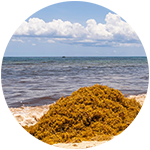
Each year, our beaches may see increased sargassum from March through October, with peak months generally June and July. Sargassum is a type of floating brown seaweed that travels across the Atlantic Ocean. While its arrival may catch beachgoers by surprise, it plays an important role in the coastal environment and is removed and managed daily by Miami‑Dade County through a State permit.
Addressing sargassum within regulatory frameworks is both a current and long-term priority for the City of Miami Beach.

In Miami Beach, seaweed—specifically sargassum—is a type of brown algae that floats on the ocean’s surface thanks to small, gas-filled sacs called pneumatocysts. Common throughout the Atlantic, sargassum often forms large floating mats influenced by ocean currents, wind patterns and changing weather conditions.
Sargassum has environmental benefits as it serves as a habitat for migratory marine life such as crabs, shrimp, sea turtles and some fish. Small amounts that wash ashore help build and nourish sand dunes, which protect coastlines from erosion, high tides and storms. It is one of the essential features of designated critical habitat for loggerhead sea turtles and proposed critical habitat for green sea turtles under the Endangered Species Act (ESA). It serves as a primary nursery area for a variety of fish such as mahi mahi, jacks and amberjacks. It also has been found to absorb nutrients and sequester carbon dioxide, helping to mitigate ocean acidification and remove pollutants from marine waters.
Since 2011, the amount of sargassum reaching Caribbean and Florida coastlines has increased. In Miami Beach, large amounts typically arrive from March through October. Satellites can track sargassum at sea, but the exact amount and location of sargassum landing daily on our beaches varies due to local winds, ocean currents and changing tides that can result in Sargassum Inundation Events (SIEs). When sargassum reaches our beaches, it decomposes onshore. The decomposition process can produce odors caused by natural hydrogen sulfide and ammonia gases. While sargassum accumulation can disrupt beachgoers, sargassum is removed from hot spot areas and cut into the shoreline daily by Miami-Dade County through a State permit.
 Is it Harmful to Beachgoers?
 Where Does it Come From?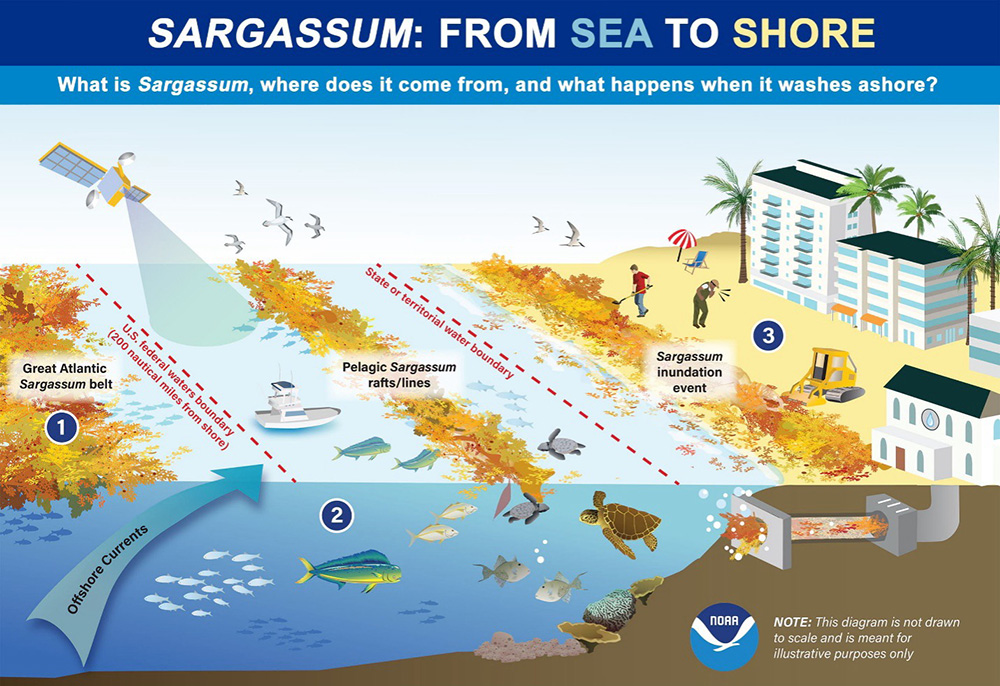
 Beach Management
 What Happens with the Collected Sargassum?


